 Last month, I was fortunate enough to be able to take a quick run through the NY Toy Show at The Javitz Center. To say I was completely overwhelmed and overexcited is an understatement! I could have spent hours and hours looking at all the toys and figuring out which one of my kids would benefit from what. One of the coolest things I saw was an interactive iPad toy called Tiggly. I was fortunate enough to be able to talk to someone from the company and was so impressed with what they showed me.
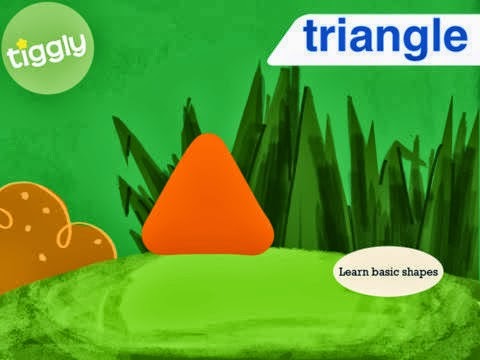
 A little bit about Tiggly. They are a team of PhDs, MBAs, parents, grandparents, uncles and aunts who want to help parents introduce their children to the digital world in an easy and educational way. What they ended up creating was an interactive tablet toy that works with learning apps. They believe that there learning can be fun and more powerful for some when children are given the opportunity to combine digital and physical play. With Tiggly, children are given the opportunity to explore geometric shapes (circle, square, triangle and star) and work on spatial relations by manipulating physical shapes while interacting with the creations they make on the iPad.
The Tiggly Shapes and the apps are designed for children between the ages of 18 month and 4 years. I have used them in my office for some of my older children who may have more language and cognitive delays and they have had great success with them. The shapes have a soft plastic cover and silicone touch points that allow them to be recognized by the iPad apps. They are well made and durable objects that can withstand the damage a tough toddler can cause but gentle enough that they won't damage your iPad screens. I really like the size of them as they can work on improving grasp strength and manipulation skills for younger children in a fun way.
As of right now, there are three apps available in the App Store. All are free for download and can be used without the shapes but are much more fun and engaging with them. Below you will find a brief description of each and some of the goals that can be worked on when using them.
Tiggly Safari-while using the 4 Tiggly shapes, this game is designed to help facilitate a child's spatial cognition development. In the first level, children match shapes with what they see on the screen and create simple animals out of single shapes. As the children master that level, the challenge increases and they are asked to create more complex animals while combining different shapes. Sometimes it is combining the same shapes in a single screen but as it gets more complex, they combine shapes to make animals. For a real challenge, the shapes will begin to move around the screen so you have to track where they go and match the shapes. Sounds easy, but it can be difficult for some of my kids.
*great for working on shape recognition, matching and improving eye-hand coordination. For children who are younger, you can begin to introduce new animals and encourage language skills.
For my speech therapist friends, this app is perfect for you because you can use the video/camera recorder to save the stories they tell about the scenes they have made. For parents who aren't able to come to therapy sessions, you can record the stories and then send them to them so they can have some conversation about what they did during their session that day.
*great for working on shape recognition, language skills and visual motor/perceptual skills.

Tiggly Draw-while I love each of the Tiggly apps, I am a particularly fond of this one. As an occupational therapist, I am constantly looking for ways to work on building body awareness and work on drawing skills in a fun and motivating way. For some of the kids I work with, learning how to draw a person is an important and crazy difficult skill. Kids who have decreased body awareness have a much more difficult time drawing a person than a typically developing child. It can also be very frustrating for that child so you have to come up with fun ways to work on it. I have used this app so that kids place a couple of shapes on the iPad and then have to add body and face parts. We talk about what body parts they added, what they help us do and then have them try and draw a picture themselves.
*improve body awareness, improve grasping skills (after using the Tiggly Draw app, have the child draw a picture using paper and crayons) and improve language skills (talk about the body parts you add and what they do).

In addition to the goals addressed above, Tiggly shapes can be used to work on the following occupational therapy goals:
Improve Bilateral Coordination Skills-for some of my kids, I will have them sit on the platform swing while playing the game. They have to hold the iPad with one hand and use the other hand to grab and hold the shapes. For some kids, working with two hands can be difficult and tiring. If motivated enough, they won't tire as easily because they will be so engaged with what they are doing that they don't notice they are working so hard!
Encourage Crossing Midline-I like to place the Tiggly shapes on the opposite side of a child's body so they have to cross midline to find the matching shapes. Sometimes I have to gently hold one hand down or use verbal prompts to remind them not to switch hands but once they are in a routine, they do it more independently. If you look at the picture to the right, you will see how you can set up a working environment to encourage crossing midline during this activity.
 Improve Upper Extremity Strength-I have used the shapes and apps while my kids lie in the net swing or barrel to work on increasing upper extremity and neck strength. When they are engaged and focused on the iPad (and these games are super interactive and engaging), they forget that they are in the swing and can get them to remain in that challenging position for longer periods of time.
Improve Social Skills-I am excited to try the Tiggly Draw and Tiggly Stamp apps in a small group setting to work on improving pragmatic language, turn taking and being a flexible friend. The great thing about these two apps is that children can work in small groups and take turns placing the shapes onto the iPad. With Tiggly Draw, the kids can take turns putting different body parts on the shapes. This may require one friend to be flexible and deal with a friend making a choice that they didn't have in mind or expect. Tiggly Stamp can be an opportunity to work on friends telling a story together. I think it would be really fun for the kids to come up with a story together and be able to listen to it together and then problem solve on what they might change or do differently.
If you read my blog, you will know that I talk about apps and iPads quite often. While I feel like it is an awesome motivator for many of my kids, it is not my end all and be all as far as therapy goes. One of the many things I like about the Tiggly shapes and apps is that they can be used in conjunction with other therapeutic modalities. For example, I talked about how you can use the Tiggly Draw app to work on expanding drawing skills. By using the Tiggly Stamp, a child can work visual motor and perceptual skills along with improving language skills.
If you read my blog you will also know that I love to support small companies and businesses. Tiggly is a new company but I think that it's got some big things happening and think it will be a really big deal soon. I know for a fact that they have some big things happening that will be launched soon. Things that will be great for older kids and make our kids be better thinkers and problem solvers.
For my fellow Park Slopers who are interested in buying these, you don't have to go very far to get them yourselves. Norman and Jules carry them in store and online. For those of you who are not in my hood, check out this listing to see where the most convenient place to purchase them is. Try and buy them from a local small business as they count on us for their business!
Have you used the Tiggly shapes and apps yet? What do you think of them and what are some of the occupational therapy goals that you address when using them? I am always a click away and would love to hear from you about how you are using Tiggly and what your kids (work or personal) think of them.


